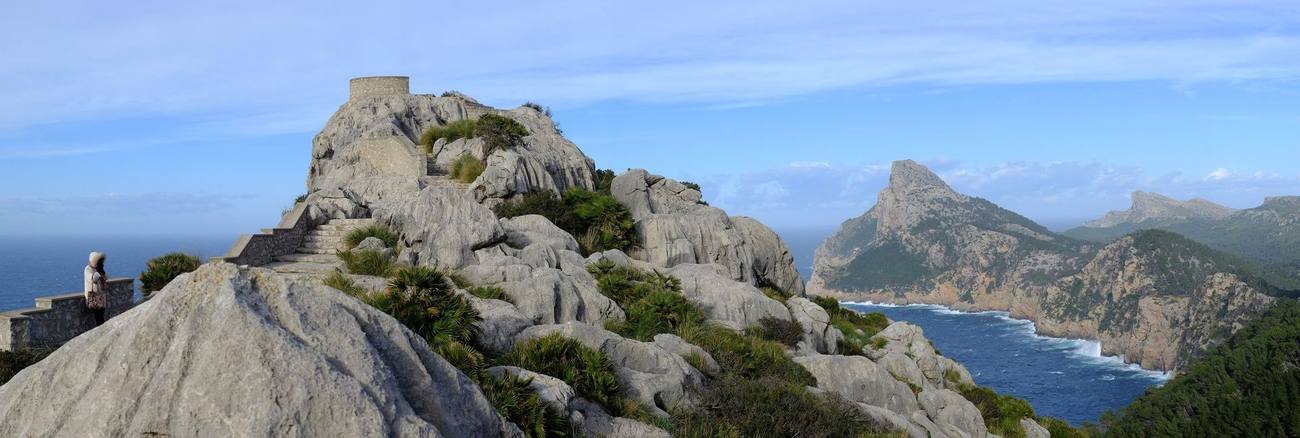
Mallorca
Hiking
Private Guided Walking · Serra de Tramuntana
An honest, practical guide to walking Mallorca's UNESCO mountain range — signature trails, route grading, the GR221, Walk & Wine, and local guidance from thirteen years on the trail.
Why we walk the way we do
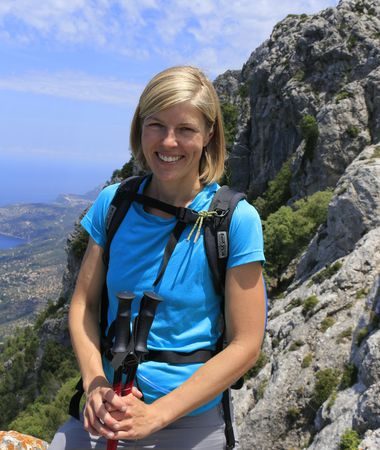
Founder & Head Guide
Mallorca has a thousand paths. We have been walking them for thirteen years, and we still haven't run out of favourites.
When I founded Mallorca Hiking in 2013, the intention was never to herd thirty strangers behind an umbrella or race against a stopwatch. It was to do something smaller, quieter, and properly run: private walks for one party at a time, guided at their own natural pace, on trails where you can actually hear the breeze through the holm oaks.
The Serra de Tramuntana is a UNESCO World Heritage cultural landscape, but first and foremost it is a living, working mountain range. Its dry-stone paths were cut centuries ago by muleteers, charcoal-burners, and the snow-gatherers who climbed the high summits after winter storms to pack ice for the city of Palma. Walking these trails with someone who knows the history, the flora, and where the cool shade falls at two in the afternoon turns a simple hike into an experience you remember for years.
Whether you want an easy amble through ancient olive terraces ending with a chilled glass of Malvasia, or a rugged ridge hike above the cliffs of Sa Dragonera, we take care of the route planning, safety, and timing so you simply turn up, lace your boots, and walk.
We look forward to walking with you.
Contents & How to Use This Guide
Guide Contents
How to Use This Guide
Check the grading scale first (p. 9): Walking in Mallorca is rarely flat. Match your party's stamina and balance to our honest Green, Blue, Red, or Black levels before picking trails.
Align with the seasons (p. 13): The Tramuntana writes its own weather. Spring brings flowers, autumn brings warm seas, winter brings crisp stillness, and summer asks for dawn starts.
Select your signature day (pp. 10–12): Browse our lookbook routes or consider Walk & Wine. Every private itinerary can be adjusted to your wishes.
Get in touch directly (p. 16): Message Nina on WhatsApp or email with your travel dates, group size, and where you are staying. We handle the rest.
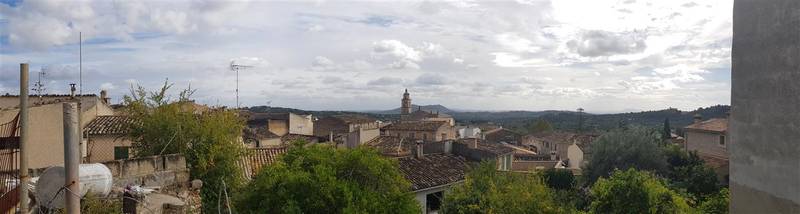
The mountain that writes its own weather
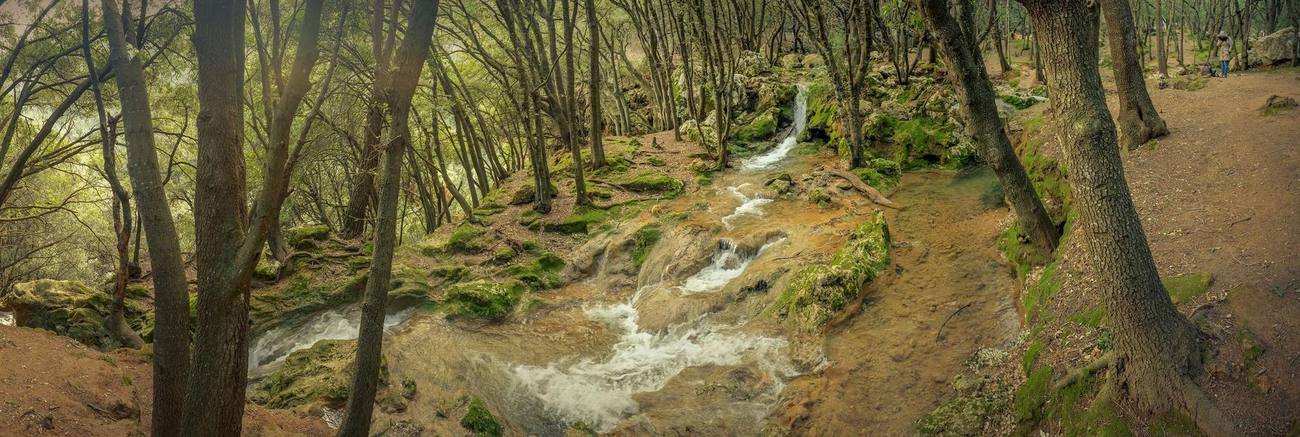
A jagged limestone spine running ninety kilometres from Andratx in the south-west to the lighthouse of Cap de Formentor in the north-east, rising to 1,445 metres at Puig Major.
To most holidaymakers, Mallorca means white sand beaches and sheltered coves. But turn your back on the sea and the Serra de Tramuntana rises like an ancient stone fortress, commanding almost the entire western coast. It is a genuine mountain range that creates its own microclimate — banking cool clouds along its peaks while Palma swelters in the heat, trapping mountain breezes in narrow limestone ravines, and feeding cold freshwater springs that continue to run long after the lowlands have turned amber.
What makes walking here genuinely different from anywhere else in Europe is not just the dramatic topography, where 1,000-metre cliffs drop straight into cobalt waters, but the intimate coexistence of raw mountain wilderness with two millennia of human handiwork.
Dry stone, ancient olive trees & silent woods
In 2011, UNESCO declared the Serra de Tramuntana a World Heritage site under the Cultural Landscape category — recognizing that this range was not sculpted by geology alone, but by centuries of human ingenuity working with scarce water and vertical rock.
The craft that built this mountain world is pedra en sec: dry-stone masonry constructed without a single trowelful of mortar, held purely by gravity, stone selection, and the friction of interlocking rock. Terraces called marjades climb impossible precipices, transforming barren cliffs into fertile groves of gnarled olives and sweet oranges.
Cobbled donkey paths — camins de ferradura — zigzag up sheer rock walls where modern roads still cannot venture. As you walk with our guides, the silent woods slowly reveal the traces of the people who shaped this landscape: circular charcoal-burners' platforms (sitges), domed limestone kilns (forns de calç), and deep stone-lined pits where the nevaters packed winter snow into blocks of ice to carry down to Palma through the night.
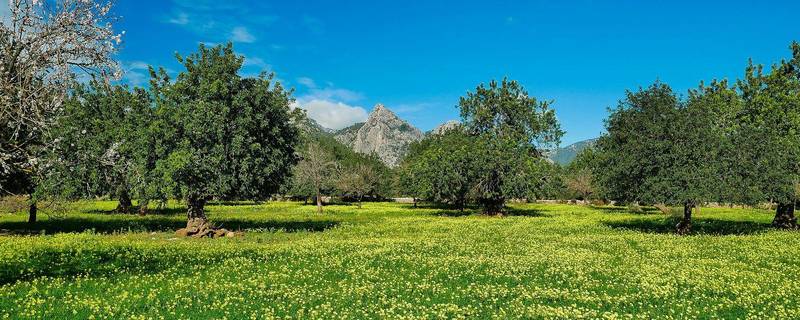
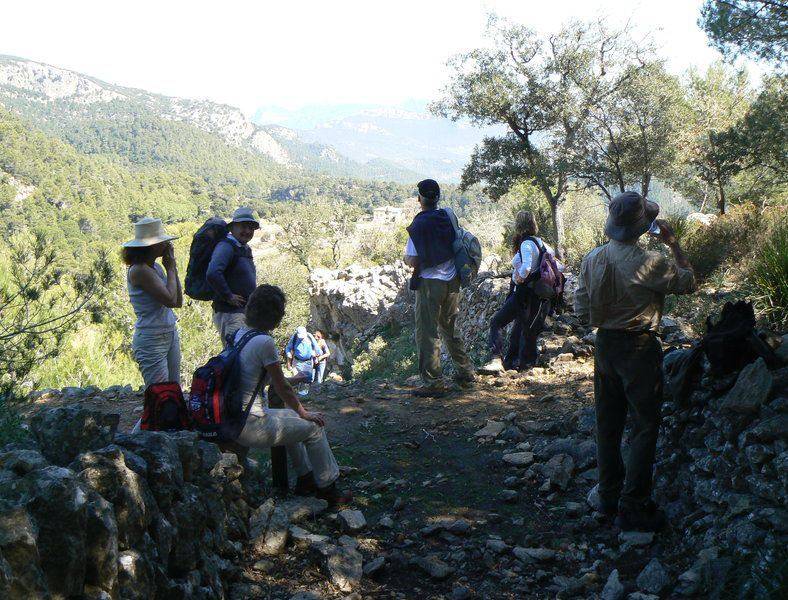
Walking with a private guide transforms what would otherwise be a strenuous rocky trek into an intimate story of island culture, botany, and living heritage.
The GR221, explained
Around 130 kilometres, eight days of walking, and approximately nine thousand metres of total ascent: Mallorca's iconic long-distance mountain traverse.
The Gran Recorrido 221 (Dry Stone Route) threads the entire spine of the Tramuntana, linking ancient bridleways, mule tracks, and mountain passes between Port d'Andratx in the south-west and Pollença in the north. Begun in the 1990s by the Consell de Mallorca, it restored long-forgotten paths that once connected remote villages before motor roads existed.
The Eight Stages at a Glance
| Stage | Route & Character | Dist. | Ascent |
|---|---|---|---|
| 01 | Port d'Andratx / Es Capdellà to Estellencs · Wild southwest ridges | 15 km | +600 m |
| 02 | Estellencs to Esporles · Coastal pine woods & historic fincas | 14 km | +500 m |
| 03 | Esporles to Valldemossa · The ancient Camí de sa Coma d'en Busquets | 10 km | +580 m |
| 04 | Valldemossa to Deià · The Archduke's clifftop bridleway | 12 km | +620 m |
| 05 | Deià to Sóller · Gentle coastal path, olive groves & Can Prohem | 10 km | +310 m |
| 06 | Sóller to Tossals Verds · The great Barranc de Biniaraix staircase | 15 km | +950 m |
| 07 | Tossals Verds to Lluc · High karst alpine passes & snow houses | 15 km | +850 m |
| 08 | Lluc to Pollença · Holm-oak forest descent into the northern valley | 17 km | +250 m |
The stages worth your legs — and how to walk them
The Stages Worth Your Legs
Deià to Sóller (Stage 5): The gentlest stage of the entire route. Mostly downhill on ancient cobbles through olive groves, with the sea on one side, mountain cliffs on the other, and cold freshly squeezed orange juice at Can Prohem finca. Ideal for any walker.
Barranc de Biniaraix (Stage 6): The true architectural set-piece of the GR221: a theatrical limestone gorge climbed via two thousand hand-hewn stone steps, with terracing rising like an ancient Roman amphitheatre above mountain streams.
Es Capdellà to Estellencs (Stage 1): The raw, lonely south-west. Quiet tracks across the historic Galatzó estate, past restored charcoal huts and a working stone well, over a windy col to a remote clifftop village.
Guided, Self-Guided, or 50/50?
The main trails are marked with wooden signs and red paint, but navigation can become tricky on high cols in sudden fog.
What a private guide adds is total peace of mind: flexible pacing, secret scenic variants, sheltered plan-B routes when high winds strike, and the living stories behind the landscape.
The 50/50 Option: For confident hikers, we often guide the demanding high mountain days (e.g. Barranc de Biniaraix to Tossals Verds) while you walk the gentler valley stages independently.
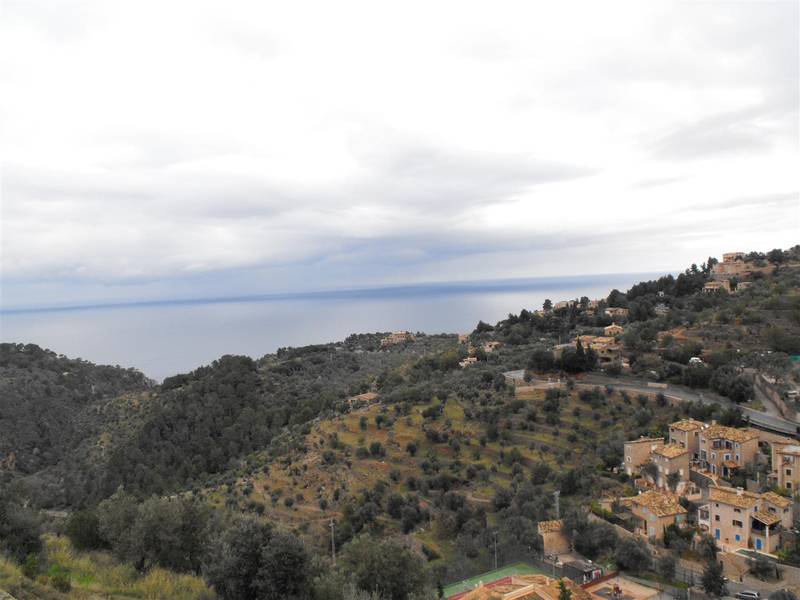
What a private walking day actually looks like
No whistles, no name badges, and no twenty strangers waiting while someone buys an ice cream. Here is how a guided day with Mallorca Hiking actually unfolds.
We meet directly at your hotel or rendezvous at the trailhead parking. We confirm exact timings, weather outlook, and gear the evening before by WhatsApp or email so there is zero guesswork.
Because the walk is exclusively yours, the pace matches your rhythm. If you want to stop to photograph wild bee orchids, admire a panoramic sea view, or take a breather on a steep switchback, we pause. Nobody is rushed; nobody is left trailing behind.
If knees start complaining halfway through a descent, we adapt and take a gentler shaded mule track. If the group feels energetic, we add an extra peak lookout or a detour to an ancient cave. The itinerary bends around you.
Mountain weather can turn quickly. If high gusts make an exposed limestone ridge unsafe, we do not simply cancel your day — we move the hike to a sheltered inland valley, a sunlit forest trail, or a coastal path on the protected lee of the island.
A fully qualified local guide dedicated exclusively to your group, tailor-made route design and estate permits, full civil liability and accident insurance, deep local natural and cultural interpretation, and dependable recommendations for post-walk lunches and dinners.
[NINA: real review here or delete this block — e.g. a brief quote from a verified guest regarding their private guiding experience in the Tramuntana]
How we grade our walks
A simple four-colour system inspired by ski runs — so you know exactly what a day on the trail will demand of you before you lace up.
Good walking in Mallorca is rarely flat. Distance alone does not tell the full story. Every route in our portfolio is carefully evaluated on five criteria: steepness of climbs and descents, actual moving time, ground underfoot (scree, jagged karst limestone, or smooth cobbles), required cardiovascular stamina, and exposure or easy scrambling over rocks.
Manageable for anyone in reasonable physical shape. Trails may have brief steep sections and uneven cobblestones underfoot, but distances are modest.
Some sustained climbs, rough stony donkey tracks, and occasional easy stepping over rock. Requires comfortable walking stamina and good footwear.
Steep ascents and descents over rough, rocky terrain. May include cliff-edge paths or light scrambling. Suitable for active, regular walkers with good balance.
Our longest and most demanding mountain days. Steep karst rock, loose scree, sustained elevation gain, and exposure. Requires high mountain fitness.
The Walks Lookbook
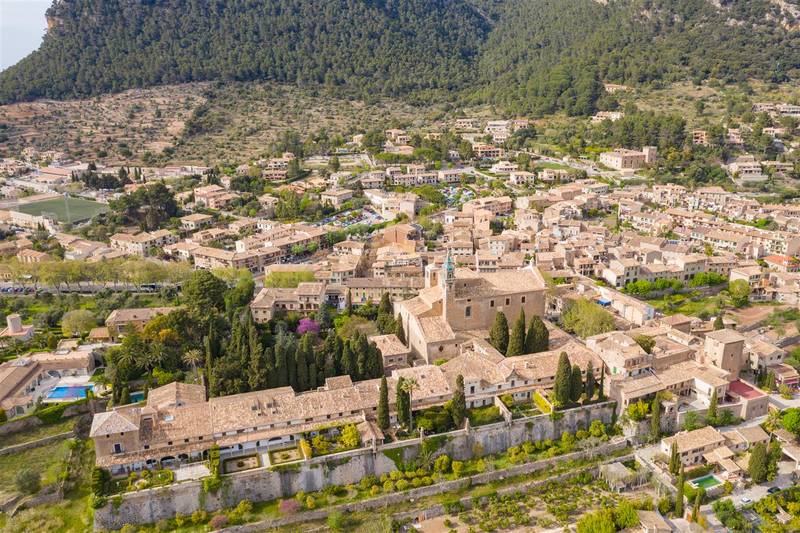
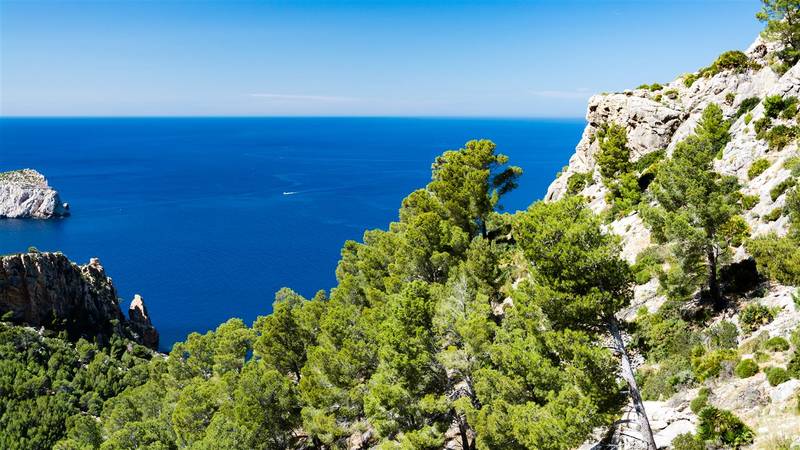
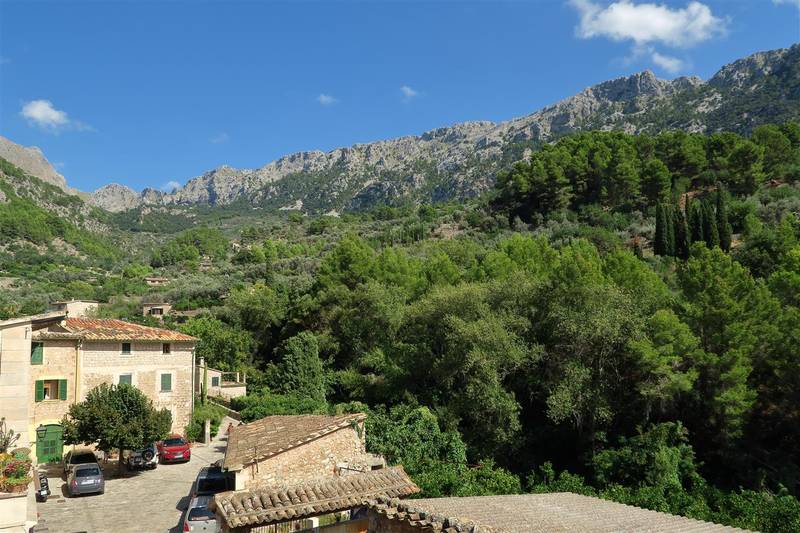
The Walks Lookbook
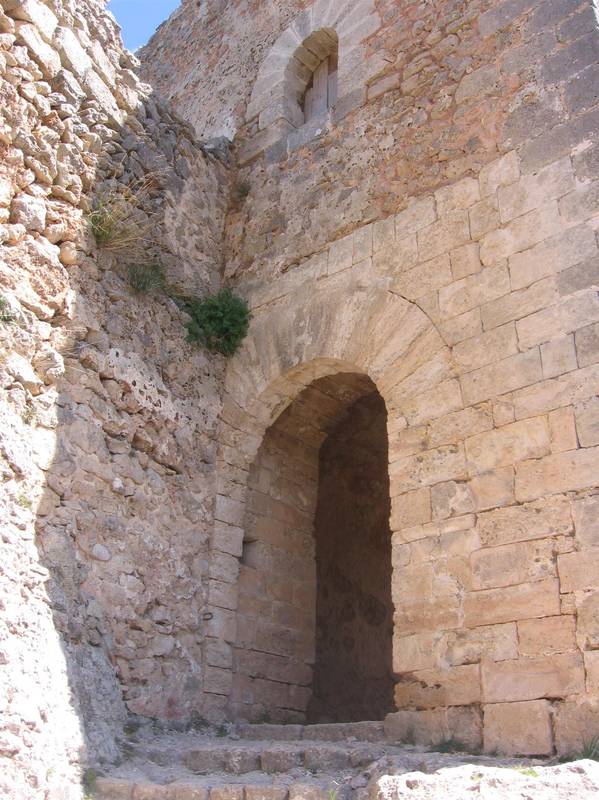
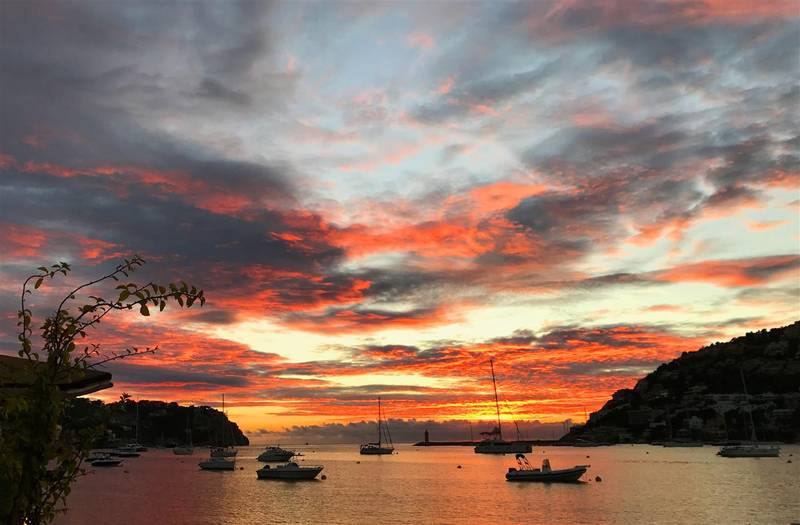
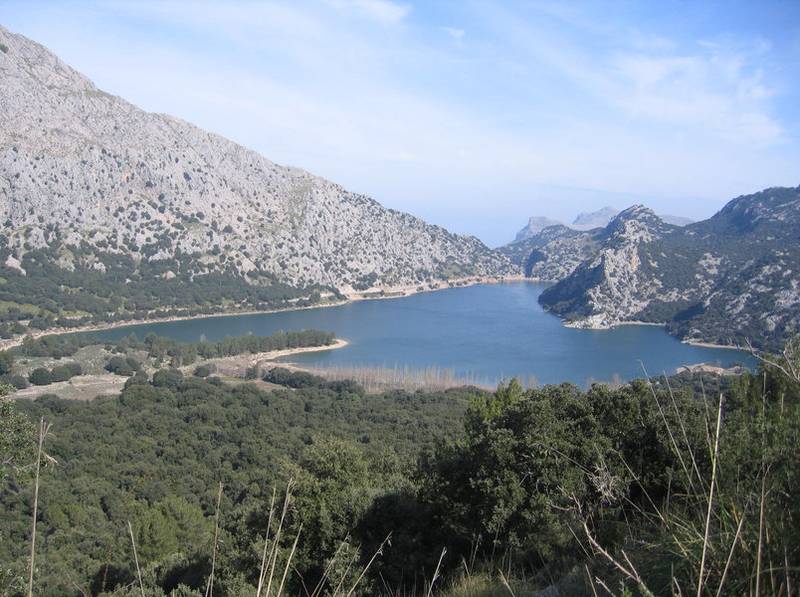
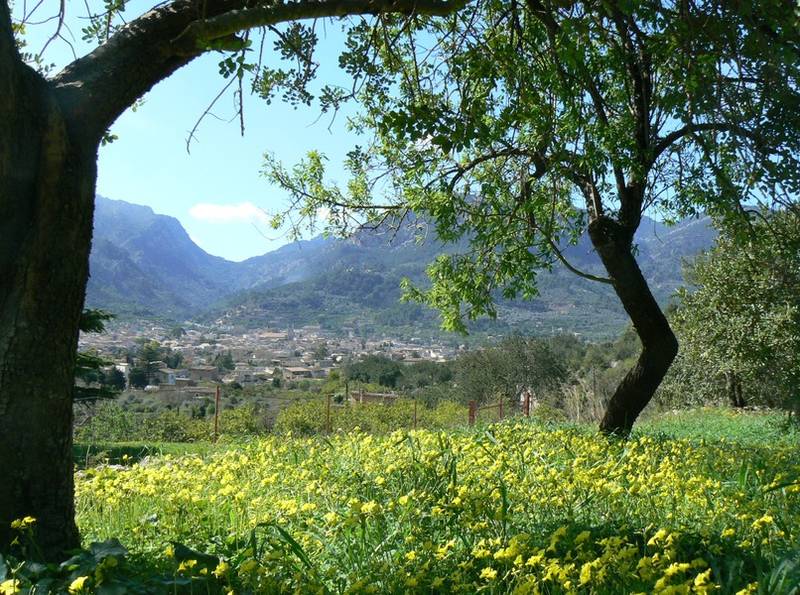
Vineyard trails & private cellar tastings
A morning walk through olive terraces and holm-oak woods, finishing on foot at a private family estate for a cellar visit and local delicacies. Zero driving worries.
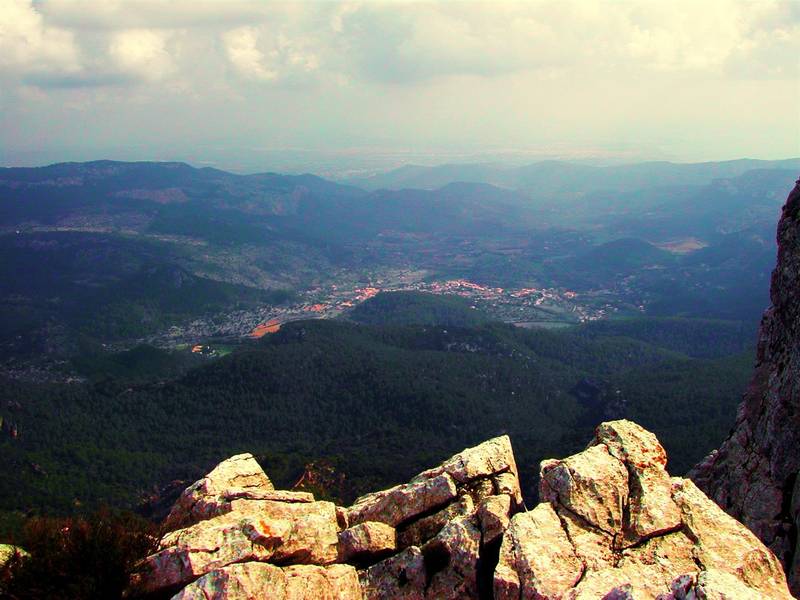
Featured Bodega: Son Puig (Puigpunyent)
Nestled at the foot of Puig de Galatzó, Son Puig is a handsome 16th-century manor house where the Alabern family has cultivated vines and cherries across seven hectares for generations. You reach the estate on foot, stroll past the historic chapel into the vineyards, and settle into the stone cellars for an unhurried tasting.
Two Walking Approaches:
· The Long Way (WW-01): 12 km · 3.5 h · +450 m · Challenging. Through ancient charcoal tracks and Son Fortesa olive terraces.
· Calvià Approach (WW-02): 8.5 km · 3.5 h · +250 m · Moderate. Panoramic climb from Calvià village along high terrace tracks.
The Three Cellar Tastings
Cellar tour & tasting of 2 estate wines with fresh artisan bread & Son Puig extra virgin olive oil. ~45 min–1 h.
Full guided tour of cellar and gardens, 3 estate wines paired with crackers and local artisan cheeses. Up to 1.5 h · groups 5+.
A complete tour of the cellar and gardens, 4 different wines and cold finger-food tapas (Iberian ham, cheese, coca de trampó or vegetable, pamboli, nuts, ensaïmada… depending on the season). Maximum 2 h · groups 8+.
When to come: the honest calendar
People book their flights first and ask about mountain weather afterwards. Here is the version we give our friends.
Spring · March to May
The undisputed premier walking window. Temperatures hover between 18°C and 22°C, freshwater springs run freely, and hillsides explode with wild bee orchids, gladioli, and deep-pink Mallorcan peonies. Every single trail on our list is in prime condition. Guides and mountain refuges book out weeks ahead.
Autumn · September to November
Arguably the guides' personal favourite. From mid-September the intense summer heat breaks, afternoon light turns long and golden, and the sea remains warm enough for an invigorating swim after the hike. Late autumn rains fill the ravines, bringing the spectacular Torrent de Pareis country to life.
Winter · December to February
Crisp, glass-clear high-pressure days. From late January, millions of almond trees blossom across the lower valleys in soft white and pink. High peaks above 800 metres can hold snow and ice, but valley and coastal walks like Deià to Sóller, Alaró, and Sant Elm are quiet, empty, and sublime.
Summer · June to August
High limestone ridges bake under the midday sun. We do not guide exposed mountain summits during summer afternoons. Instead, we start at first light (7:30 am), stick to deep oak shade and coastal breezes, and finish by lunchtime with a swim or a cool Malvasia tasting.
Month-by-Month Snapshot
| Months | Conditions | What It Is Actually Like on the Trail | Recommended Routes |
|---|---|---|---|
| Dec – Feb | 12–16°C · Crisp | Glass-clear air; almond blossom breaks late Jan; quiet, empty trails. | Sóller Villages, Alaró, Sant Elm |
| Mar – May | 17–23°C · Ideal | The peak window. Wildflowers bloom; springs flow; perfect walking temps. | Archduke's Trail, GR221, Walk & Wine |
| Jun – Aug | 27–32°C · Hot | Midday heat is intense. Early dawn starts; tree-shaded paths; swim finishes. | Banyalbufar Wine, Deià Coastal |
| Sep – Nov | 19–25°C · Superb | Warm sea for post-hike swims; golden light; great conditions for ridges. | Puig de Tossals Verds, GR221 Stages |
Where to base yourself
Pick the wrong base and half your holiday evaporates in mountain hairpin bends. Pick the right one and great trails start ten minutes from your breakfast table.
Sóller · The Working Valley Town
Set in an amphitheatre of citrus groves ringed by the highest peaks on Mallorca. It has a vintage tram clanking down to the port, a 1912 electric train to Palma, a covered market, and real town life that belongs to its residents first.
Best for: A full week of varied hiking. Direct access to Biniaraix, Can Prohem, the villages loop, and central GR221 stages, with abundant dining.
Valldemossa · The Jewel Box
Perched high at 430 metres: cobbled alleys, green shutters, Charterhouse of Chopin and George Sand, and warm coca de patata. Day-trippers crowd the main lane from 11 to 3, but evenings are peaceful and magical.
Best for: 2–3 days of atmospheric walking. Direct access to the Archduke's Bridleway and connecting GR221 stages towards Esporles or Deià.
Deià · The Clifftop Haven
The famous artists' village clinging to a terraced limestone crag above Cala Deià. Beloved by Robert Graves, poets, and musicians. Quiet, refined, with honey-coloured stone fincas and dramatic coastal paths.
Best for: Couples seeking quiet coastal luxury, dramatic sunsets, and immediate trailheads along the coastal paths towards Port de Sóller or Llucalcari.
Port de Pollença · The Northern Bay
Where the mountain spine dips into the sea at the Cap de Formentor peninsula. Flatter sea-level base with an unhurried pine-walk promenade, excellent seafood, and wide open views over Pollença bay.
Best for: Walkers combining sea cliffs with northern trails: the Bóquer Valley bird sanctuary, Talaia d'Alcúdia, and the high pilgrimage path to Lluc.
Palma · The City Base
A real city by the sea, with the widest choice of places to stay, a rich cultural life (the Gothic cathedral, old-town lanes, museums, markets) and the beach on your doorstep. It is also the best connected: the train to Sóller, buses to Valldemossa, Deià and the rest of the Serra, and the airport only minutes away.
Best for: Mixing hiking with culture, dining and sea. Easy day trips to the Serra by public transport, with a wide range of accommodation for every budget.
Everything you need before you book
What to Bring & The Footwear Rule
The limestone terrain in the Tramuntana is rocky, sharp, and uneven underfoot. Good footwear is fundamental to your safety.
- A 20–30 litre daypack per person
- At least 1.5 to 2 litres of water (reusable bottle or reservoir)
- Valid ID or passport (required by Spanish regulations)
- Sun protection: hat, high-factor sunscreen, sunglasses
- Lightweight windproof or waterproof jacket
- Quality wool or synthetic walking socks (no pure cotton)
- Foldable walking poles (strongly recommended for descents)
Pricing, Languages & Cancellation
| Group Size | Total, 21% VAT Incl. |
|---|---|
| 1–5 people (private group) | €338.80 / group |
| 6–8 people | €65.34 / person |
| 9–15 people | €56.87 / person |
| 16–18 people | €54.45 / person |
Guiding Languages (7)
All walks are guided in English. We also guide in Swedish, Finnish, Spanish, Catalan, German and French (subject to guide availability).
Cancellation Policy in Brief
More than 60 days before: 100% full refund. Within 60 days: 50% refund. Within 10 days: no refund.
Weather Guarantee: If we cancel due to severe mountain weather, you receive an immediate 100% full refund or free reschedule.
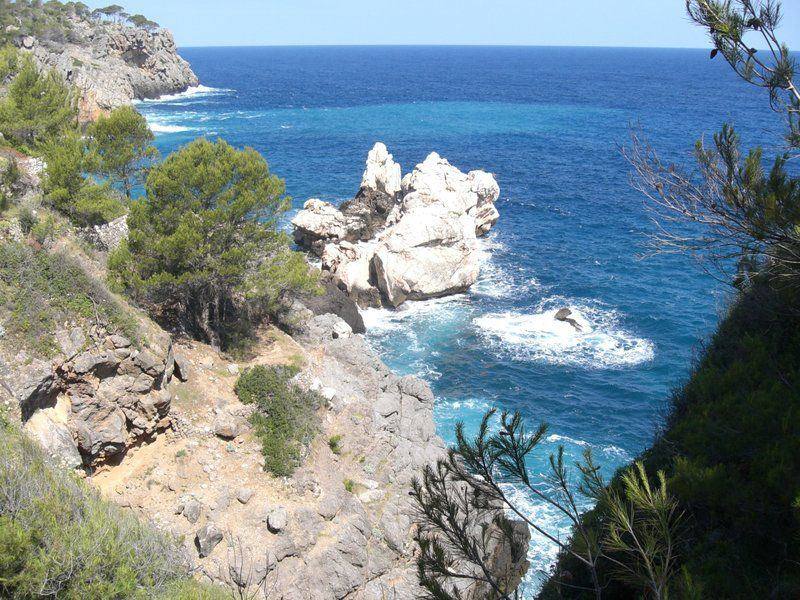
Mallorca has a thousand paths.
We know the ones worth taking.
Private guided day walks, tailor-made walking holidays, and Walk & Wine outings across the Serra de Tramuntana.
Explore Palma's historic old quarter, cathedral, and waterfront on quality city bikes with local guides. Mallorca Hiking guests receive a 10% discount.
palmabicycletours.com
Door-to-door luggage delivery between hotels, fincas, and mountain refuges along the GR221 and throughout Mallorca. Walk light.
mallorcaluggagetransfers.com